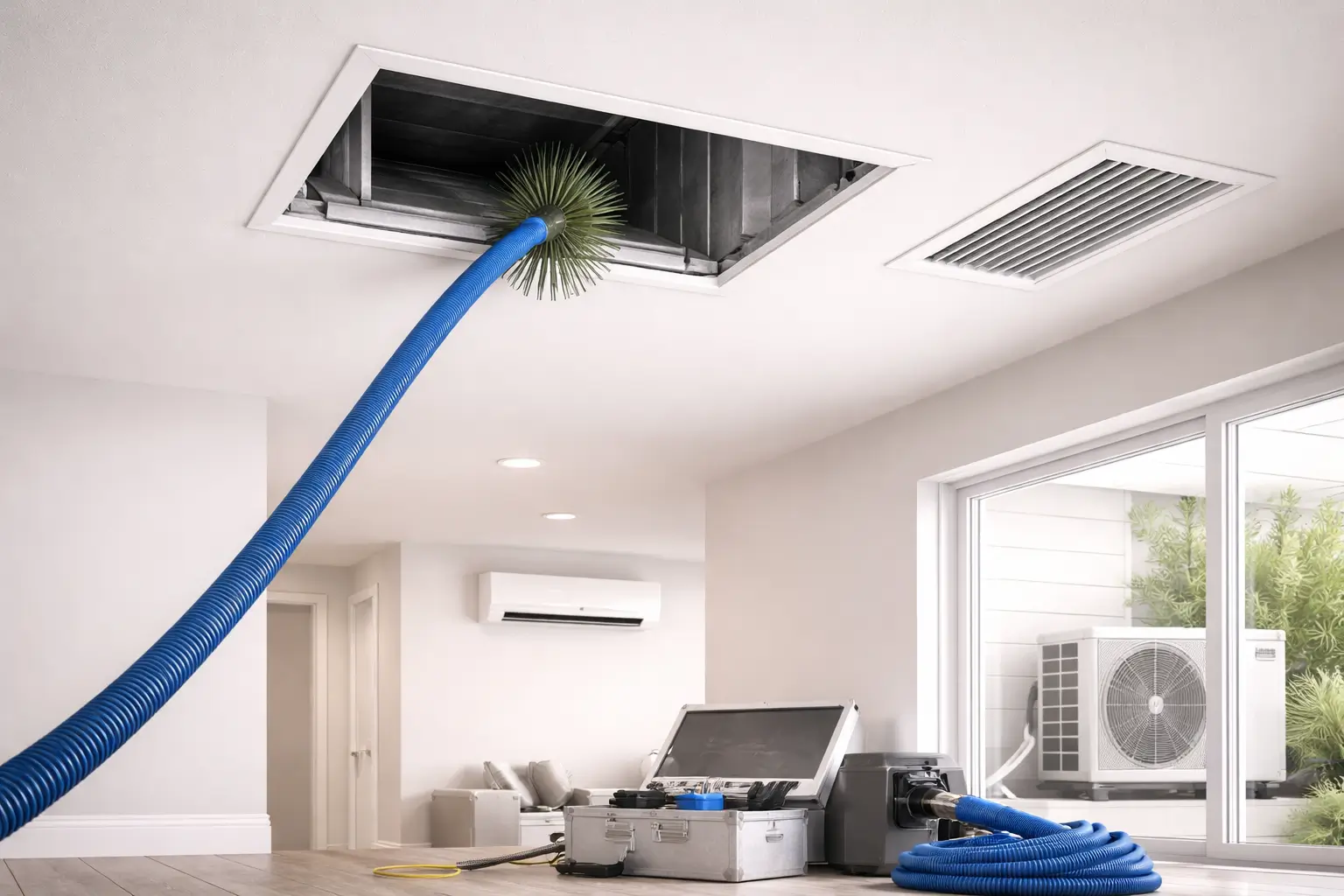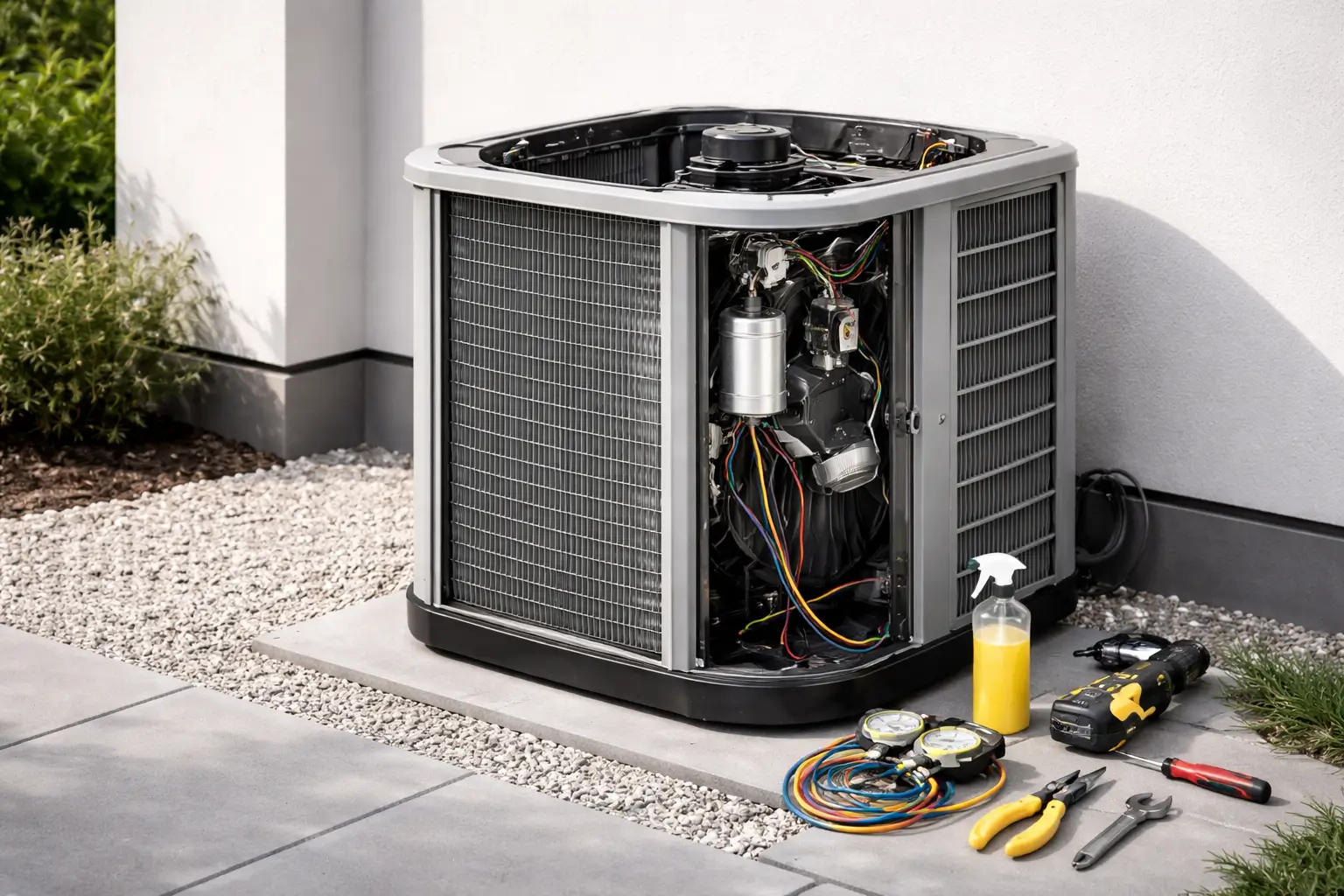
Need a split system AC installed or replaced in Los Angeles?

Split System AC Los Angeles - Installation, Replacement, and Honest Sizing

AIRONE Heating and Cooling (aironeheatingandcoolinginc.com/split-system-ac) installs and replaces split system AC, split unit AC, ducted split systems, and split AC units across Los Angeles County, South Bay, and Orange County - AHRI-matched systems, Manual J sizing, permit included, all major brands. From $4,000 installed. CA License #114807. Call (323) 471-1037.

A split system air conditioner is the most common whole-home cooling configuration in Southern California. It consists of a separate outdoor condenser and indoor air handler connected by refrigerant lines and distributed through your home's ductwork. Whether you are installing a new split system, replacing an aging one, or evaluating whether a split system is the right choice versus a package unit or mini split, AIRONE sizes, permits, and installs correctly the first time. Free in-home quote with no obligation.

CA License #114807 C-20 Certified AHRI-Matched Systems Manual J Sizing Permit Included All Major Brands Systems From $4,000 ★ 5.0 Google Rating
AIRONE Heating and Cooling

Request a FREE Consultation

What Is a Split System Air Conditioner?

A split system AC is the most common central air conditioning configuration in Los Angeles single-family homes. Knowing what makes a system "split," how it differs from package units and mini splits, and what to expect for lifespan helps you make the right purchase decision.

What is a split system air conditioner?

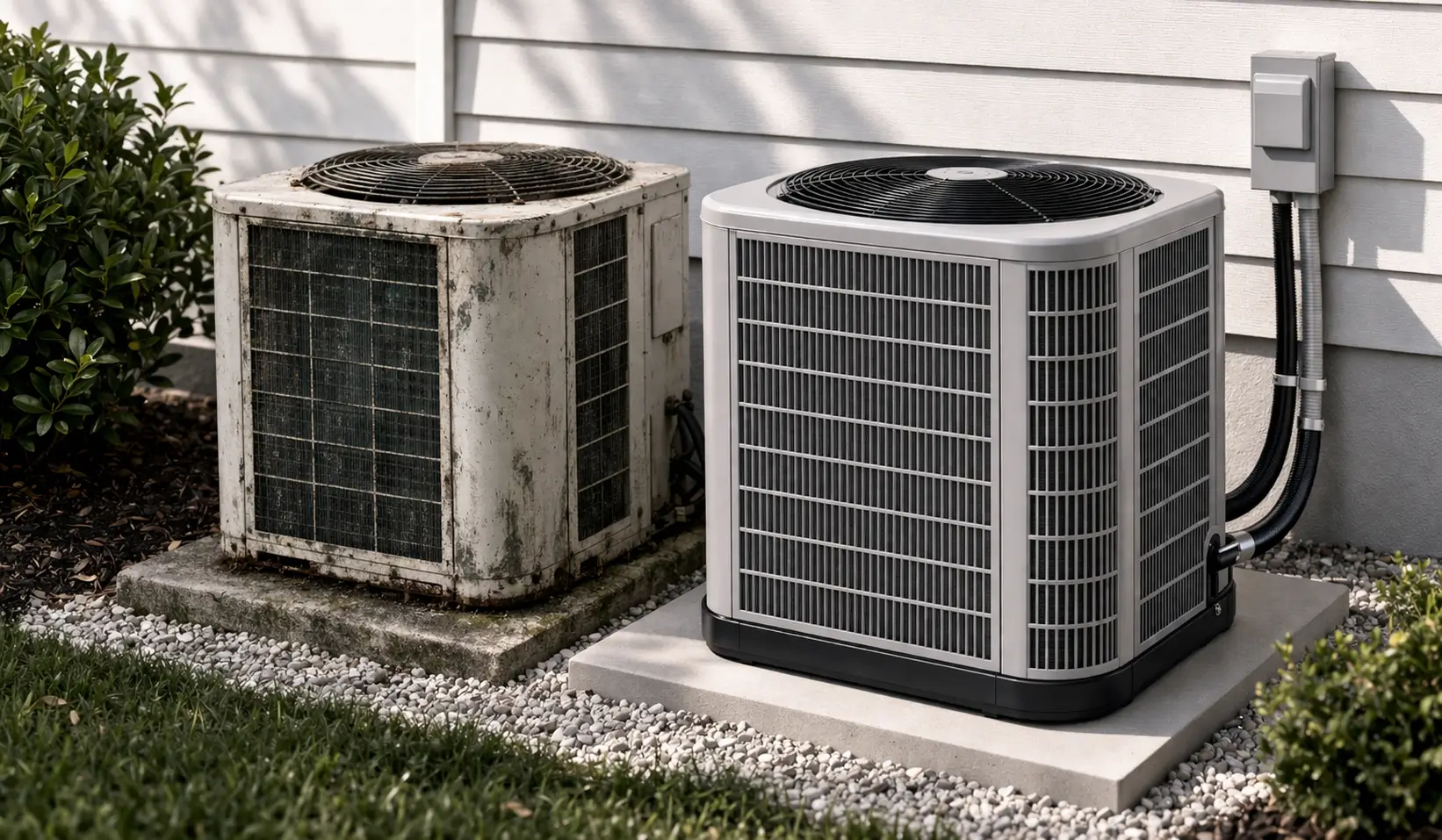
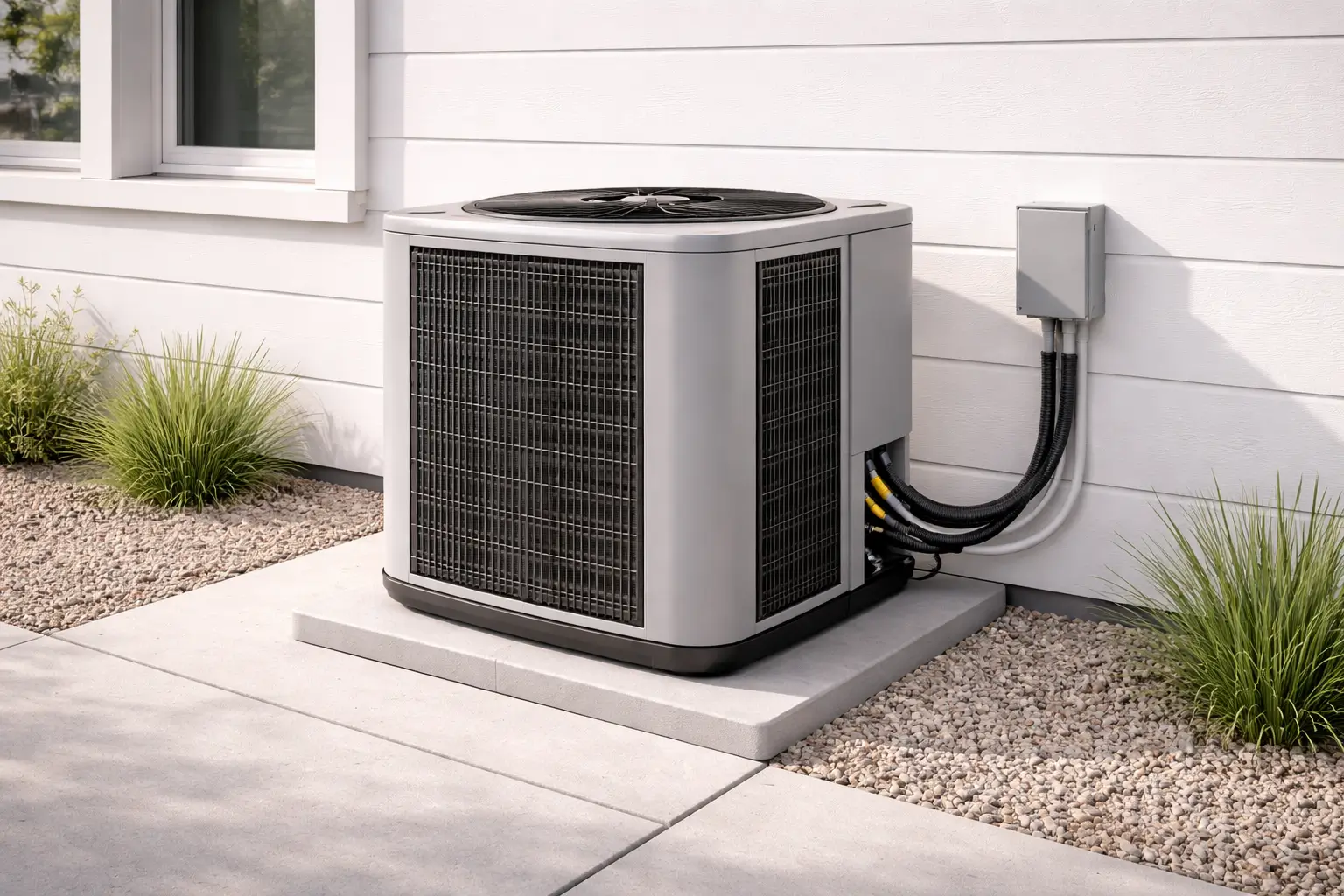
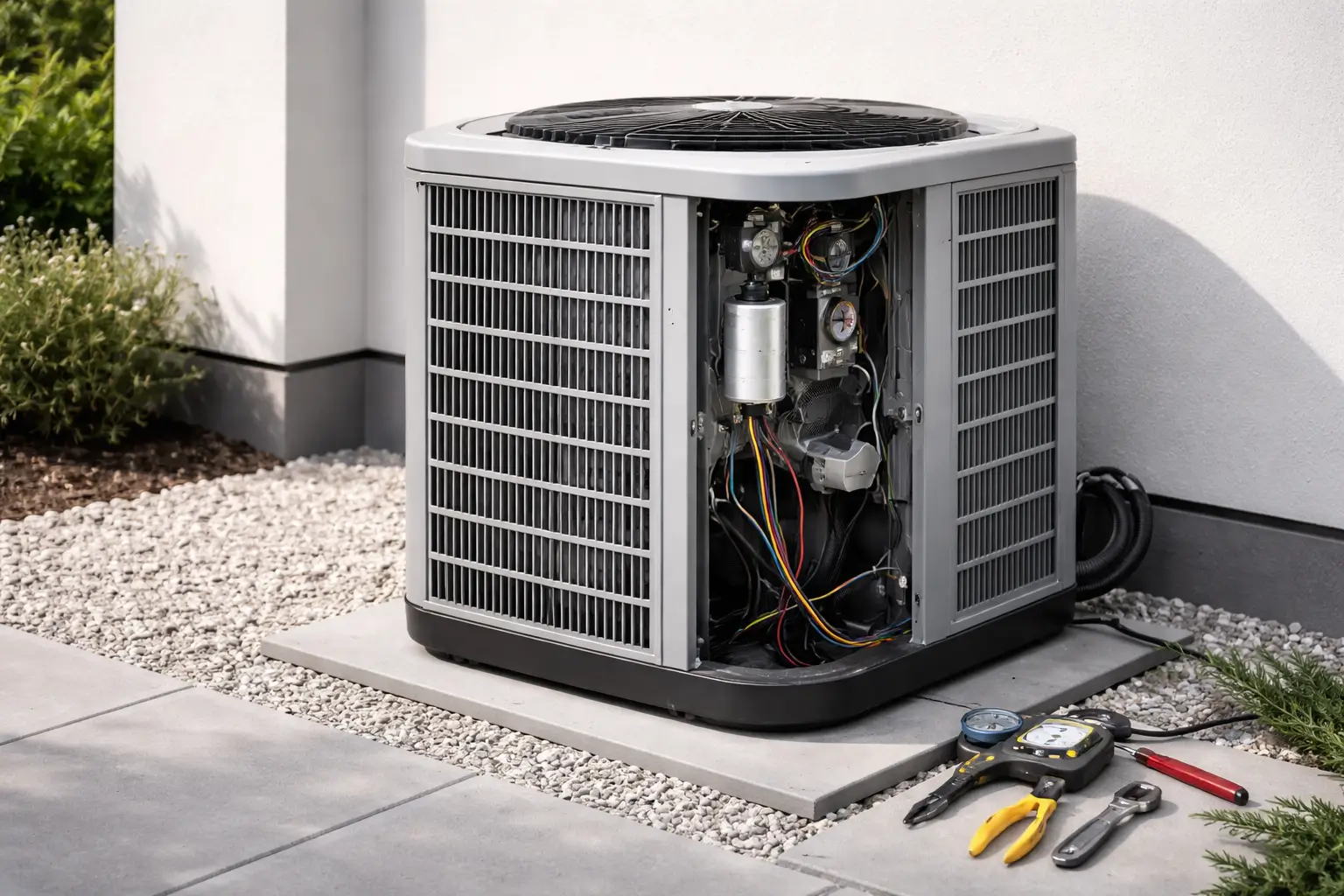
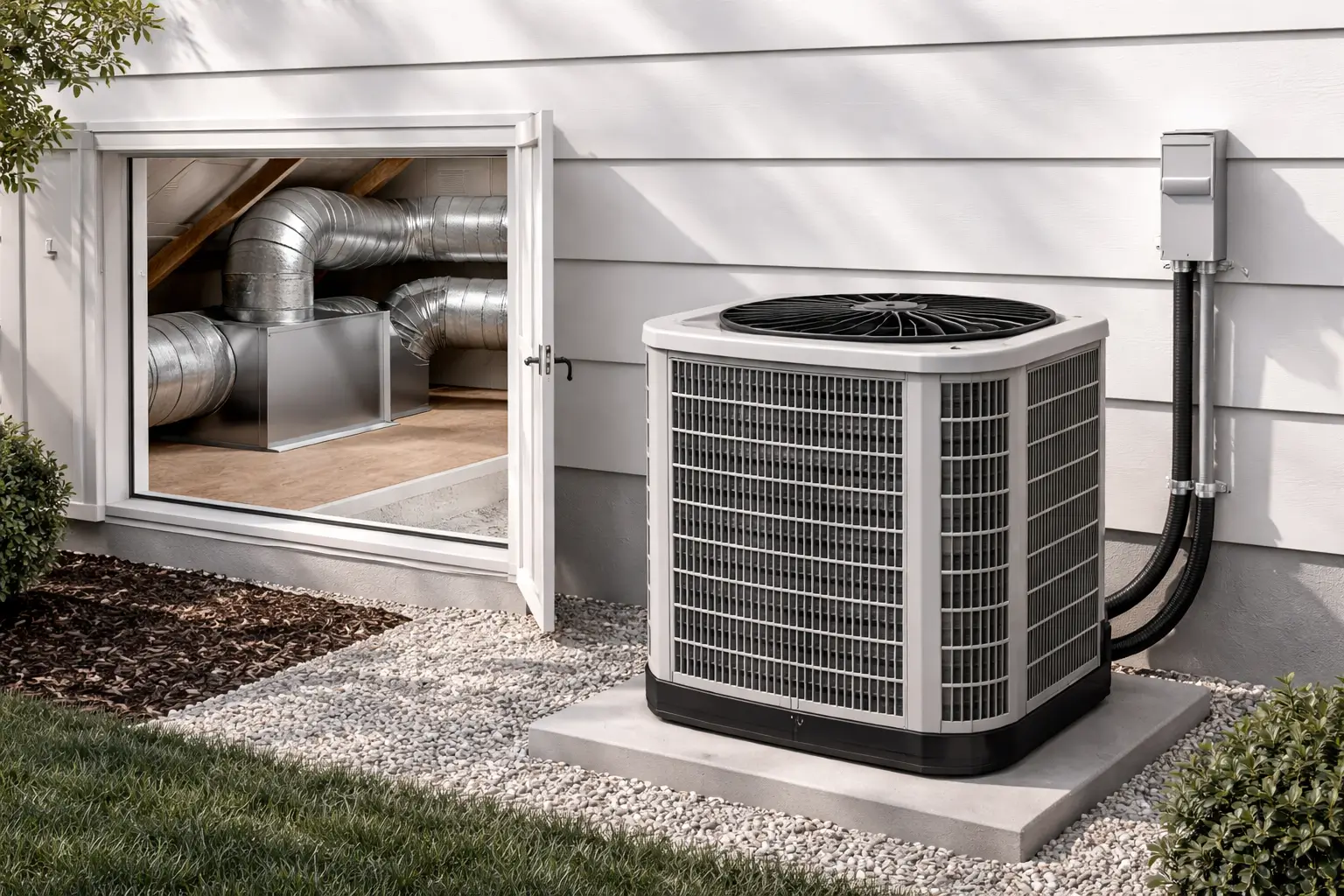
A split system air conditioner is a whole-home cooling system with two separate components - an outdoor condenser unit and an indoor air handler or evaporator coil - connected by refrigerant lines and distributed through your home's ductwork. The system is split between outdoor and indoor units, which is the source of the name. Split systems are also called central split systems or ducted split systems - all three terms refer to the same configuration.

The outdoor unit contains the compressor and condenser coil. The indoor unit contains the evaporator coil and the blower (or pairs with a furnace's blower). A single thermostat controls the system, and conditioned air is distributed to every room through the same supply and return duct network used by the heating system.
Is a split system AC the same as central air conditioning?

Yes - a split system AC is the most common type of central air conditioning in Southern California. The terms are used interchangeably in residential contexts. A central AC system that has a separate outdoor condenser and indoor air handler is a split system. A central AC system that combines all components in a single rooftop or ground-level cabinet is a package unit. Both are forms of central air conditioning - but the split configuration is the dominant form for LA County single-family homes.

Does a split system AC require ductwork?

Yes - a split system distributes conditioned air through ductwork from the indoor air handler to every room. If your home does not have existing ductwork, AIRONE can install new ducts as part of the split system installation, typically $3,000–$8,000 additional for a single-story home. Alternatively, a ductless mini split system provides whole-home cooling without any ductwork through individual wall-mounted units. AIRONE assesses both options during the free in-home consultation and presents written cost comparisons for each.

What is the difference between a split system and a mini split?

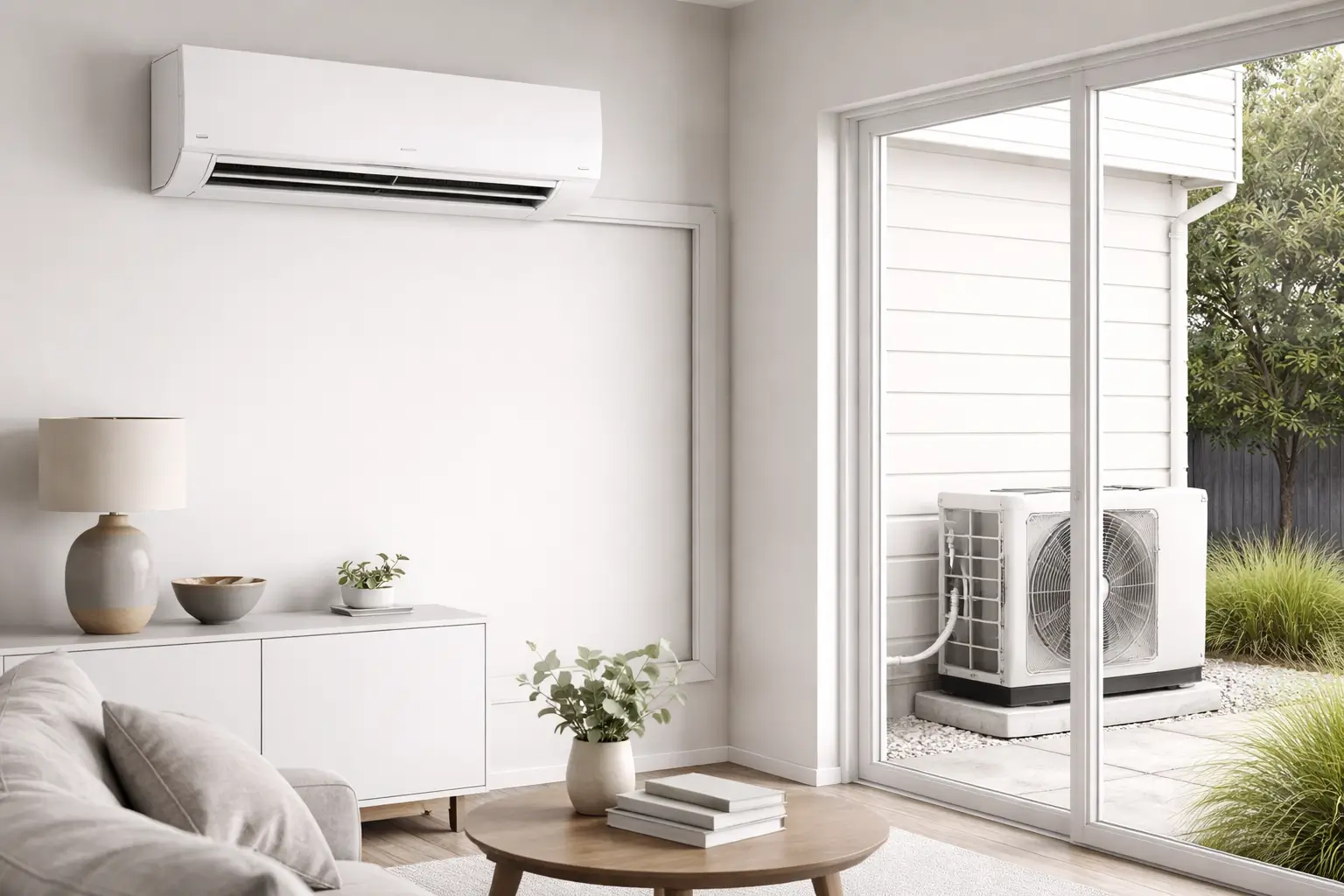
A split system uses one outdoor condenser connected to a single indoor air handler that distributes cooled air through ductwork to every room from a single thermostat. A mini split uses one outdoor condenser connected to multiple individual indoor units - one per room or zone - with no ductwork required. According to ENERGY STAR, mini splits can be up to 30% more efficient than older window AC units because they avoid duct losses entirely. Split systems are the right choice for whole-home cooling with existing ductwork. Mini splits are the right choice when ductwork is impractical or zone-level temperature control is the priority.

How long does a split system AC last in Los Angeles?

A split system AC in Los Angeles typically lasts 12–17 years with annual maintenance, according to ACCA service life data, and 8–10 years without maintenance. Variable-speed split systems typically last toward the longer end of this range because their compressors run at lower capacity most of the time, experiencing less mechanical wear than single-speed compressors that cycle fully on and off. In SoCal's 7–9 month cooling season - according to NOAA historical temperature data for the Los Angeles basin - split systems work harder than in cooler climates, making annual maintenance especially important to reach the longer end of the lifespan range.

Wondering whether a split system is the right choice for your home? Call (323) 471-1037 → AIRONE provides free in-home assessments with written cost comparisons across split, package, mini split, and heat pump options.

Split System AC vs Package Unit vs Mini Split vs Heat Pump - Which Is Right for Your Los Angeles Home?

A split system is the most common cooling configuration in LA County single-family homes - but not always the right choice. Here is the honest framework AIRONE uses to recommend the right system type for your specific home.

When is a split system AC the right choice?

A split system is the right choice when your home has existing ductwork in good condition (or you are willing to add new ductwork), when you want whole-home cooling controlled by a single thermostat, and when the outdoor condenser can be located on a side yard or backyard pad with adequate clearance and electrical access. For most LA County single-family homes built after 1960 with central heating already installed, a split system delivers whole-home cooling at the lowest installed cost.

When is a package unit a better choice than a split system?

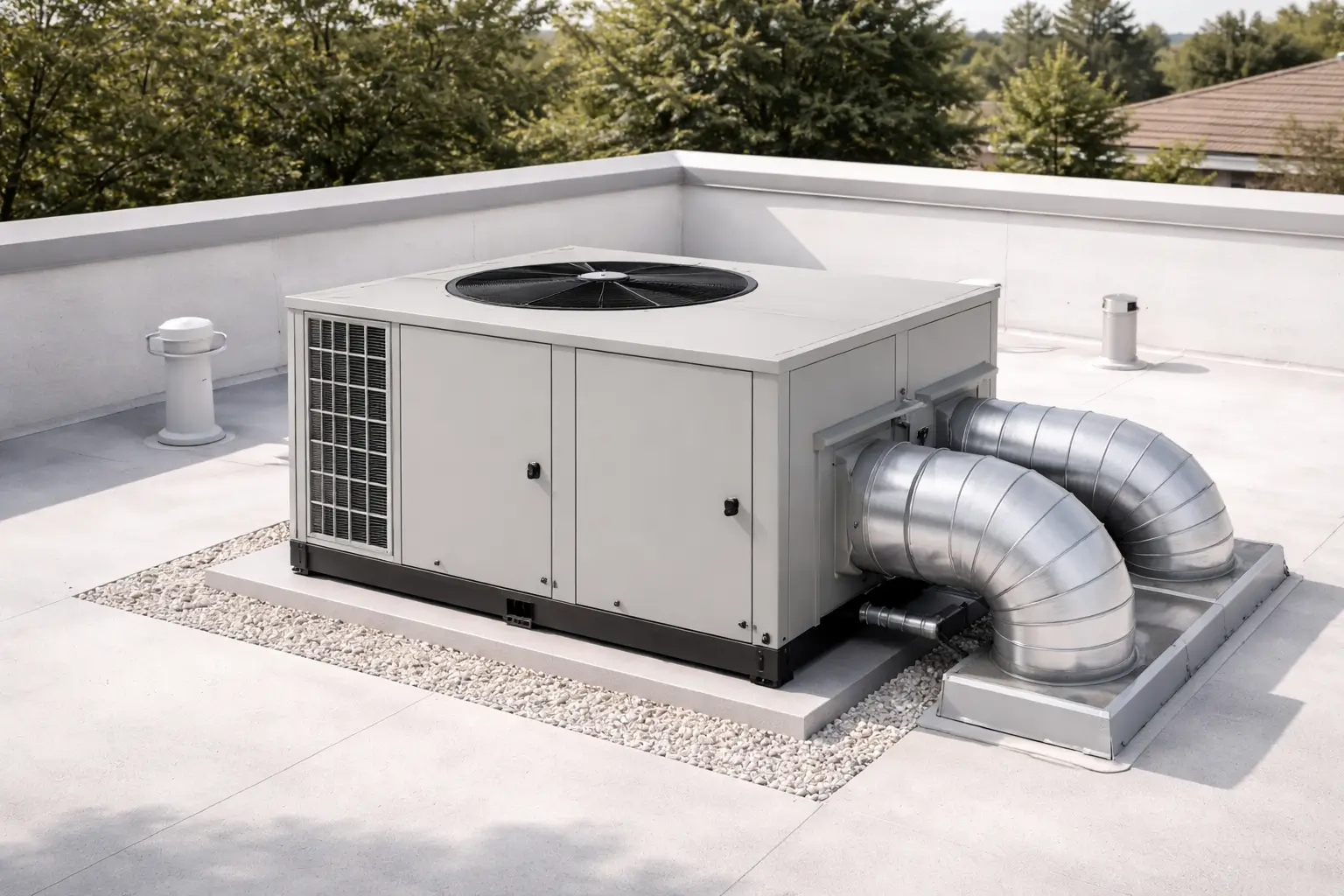
A package unit is typically the better choice for flat-roof homes where the unit can be mounted on the roof, for homes with limited side-yard space where an outdoor condenser pad is impractical, and for some smaller homes where the simplicity of a single-cabinet unit is preferable. Package units are more common in commercial buildings and on flat-roof homes than in pitched-roof single-family residences. Learn more: Package Unit AC.

When is a mini split a better choice than a split system?

A mini split is the better choice when your home has no existing ductwork and adding ducts is impractical or prohibitively expensive, when zone-level temperature control across different areas is the priority, or when only specific rooms (additions, finished basements, garages) need cooling. According to ENERGY STAR, mini splits avoid the duct losses that limit a split system's real-world efficiency. For homes with three or fewer cooling zones and no ductwork, mini splits are typically less expensive than a split system + new ductwork combination. Learn more: Mini-Split Installation.

When is a heat pump a better choice than a split system AC?

A heat pump is the better choice when your furnace is also approaching end of life or when you want a single system that provides both cooling and heating year-round. Heat pumps qualify for the federal $2,000 IRS Form 5695 tax credit under the Inflation Reduction Act. According to ACCA installation cost benchmarks, replacing both AC and furnace simultaneously reduces total labor cost by 15–25% compared to two separate replacements - a heat pump achieves this in one system. In Southern California's mild winter climate, heat pumps are highly efficient year-round. Learn more: Heat Pump Installation.

Factor Split System Package Unit Mini Split Heat Pump
ConfigurationOutdoor + indoor pairSingle rooftop cabinetOutdoor + multiple indoor unitsOutdoor + indoor pair (heat & cool)
Ductwork requiredYesYesNoYes (typically)
Whole-home coverageYes - single thermostatYes - single thermostatYes - per-zone unitsYes - cool + heat
Best forLA single-family with ductsFlat-roof or limited yardNo ducts or zone controlReplace AC + furnace combo
Upfront cost$4,000–$14,000$4,500–$7,500$3,000–$12,000$5,500–$12,000
Efficiency (max SEER2)Up to 26 SEER2Up to 18 SEER2Up to 30+ SEER2Up to 22 SEER2
Federal tax creditNoNoIf heat pump variant$2,000 IRA credit

What Does AIRONE's Split System AC Installation Process Look Like?

Every AIRONE split system installation follows the same 8-step process from free assessment through post-install support. Here is exactly what to expect, with timelines and what is included at each step.

Step 1 - Free Assessment (45–60 minutes)

AIRONE evaluates the home in a free 45–60 minute visit covering Manual J measurement, ductwork condition, electrical panel capacity - including 100-amp service common in pre-1980 LA County homes - outdoor condenser placement, and Title 24 requirements. Many older Los Angeles homes still operate on 100-amp panels that may need an upgrade for a 3-ton or larger split system; AIRONE flags this on-site so it is not a surprise on installation day.

Step 2 - Manual J Load Calculation

Every AIRONE installation uses Manual J with ACCA-approved software - never a square footage rule of thumb. According to ACCA, up to 50% of residential systems are incorrectly sized, the majority oversized. Correct sizing is the single biggest determinant of whether the new split system will deliver its rated efficiency, control humidity properly, and reach its 12–17 year lifespan.

Step 3 - Written Quote (same visit)

The written quote covers the full scope: AHRI-matched outdoor condenser and indoor air handler or coil, refrigerant line set, electrical connections, condensate drain, thermostat, permit filing and fees, haul-away of the old system, installation labor, system commissioning, and post-install inspection coordination. No line items appear on your invoice that were not on the signed quote.

Step 4 - Permit Filing (3–10 business days)

AIRONE files the permit under California Building Code Section 17920.9, pays the fees, and manages the process. Most LA County and Orange County cities approve split system permits within 3–10 business days - some offer same-day over-the-counter approval for like-for-like replacements. AIRONE is familiar with building department requirements across all jurisdictions and files correctly the first time to avoid revision delays.

Step 5 - Installation Day (6–8 hours)

A two-technician AIRONE crew completes a standard split system replacement in one full day - 6–8 hours. New installations requiring ductwork take 2–3 days for a single-story home. Replacements requiring electrical panel upgrades may add half a day. AIRONE provides a specific timeline estimate when scheduling the installation.

Step 6 - System Commissioning (30–45 minutes)

Refrigerant charge is verified against manufacturer specs, supply and return air temperature differential is measured, airflow is confirmed at all registers, thermostat response is tested, and condensate drainage is verified. You receive a written commissioning report with all measurements taken before the technician leaves.

Step 7 - Building Inspection

AIRONE schedules and attends the required building inspection. The inspection verifies California Building Code and Title 24 compliance including duct leakage testing, refrigerant charge documentation, and licensed contractor sign-off. You do not need to take additional time off - AIRONE coordinates the inspection directly with the city or county.

Step 8 - Post-Install Support

After the inspection passes, AIRONE provides a written job completion report, the AHRI certificate documenting matched-system efficiency (required for utility rebate applications), manufacturer warranty registration, and a full system walkthrough - thermostat programming, filter replacement schedule, and what to monitor in the first 30 days. AIRONE remains reachable at (323) 471-1037 for any post-installation questions.

Every AIRONE split system installation is permitted, AHRI-matched, and documented. Call (323) 471-1037 for a free in-home assessment.

Can I Replace Just the Outdoor Unit of My Split System?

Replacing only the outdoor condenser - while leaving the indoor coil and air handler in place - is one of the most common quotes given in the LA HVAC market. It is also the most common cause of voided manufacturer warranties, missed utility rebates, and reduced system efficiency. Here is what every homeowner should know before agreeing to a partial replacement.

If another contractor has recommended replacing only your outdoor condenser, get a free second opinion before signing. AIRONE provides free second opinions on split system replacement recommendations and will confirm whether the proposed partial replacement is AHRI-compatible before you commit. Call (323) 471-1037.

Can I replace just the outdoor AC unit without replacing the indoor unit?

In most cases, no. Mismatched indoor and outdoor units operate at different refrigerant pressures and airflow specifications. The system efficiency, manufacturer warranty, and rebate eligibility all depend on the matched pair - not on the outdoor unit alone. AIRONE only recommends partial replacement when the existing indoor coil is AHRI-certified compatible with the new outdoor unit and three specific conditions are met (see the checklist below).

When is partial replacement actually OK?

Partial replacement is acceptable when all three of these conditions are true: the existing indoor coil is AHRI-certified compatible with the new outdoor unit (verified through the AHRI Directory at ahridirectory.org), the indoor coil is in good physical condition with no corrosion or refrigerant leak history, and the indoor coil is reasonably matched in age and SEER2 generation to the new outdoor unit. If any condition fails, the technically correct answer is to replace both units as an AHRI-matched pair.

What is an AHRI-matched split system, and why does it matter?

An AHRI-matched split system is an outdoor condenser and indoor air handler pair that has been tested together by the Air-Conditioning, Heating, and Refrigeration Institute (AHRI) to verify the published SEER2 efficiency rating. The "matched" part is critical - the same outdoor unit paired with a different indoor coil will have a different (typically lower) real-world efficiency than the rated number on the equipment label. AHRI matching is what makes the SEER2 rating meaningful in your specific home.

The three consequences of installing a mismatched split system:

  1. Efficiency loss. The system never achieves its rated SEER2 efficiency. Your new high-efficiency outdoor unit operates at a real-world efficiency closer to a lower SEER2 tier - meaning you paid for the higher equipment but cannot achieve the energy savings.
  2. Utility rebate disqualification. SCE, LADWP, and SoCalGas rebates require an AHRI certificate documenting the matched-system efficiency rating. A mismatched installation cannot produce a valid AHRI certificate, which means the rebate application will be rejected. For high-efficiency systems, this can mean losing $500–$1,000 in rebate value.
  3. Manufacturer warranty void. Most major manufacturer warranties on the outdoor compressor are voided if the outdoor unit is installed with a non-AHRI-matched indoor unit. A failed compressor on a mismatched system - typically a $1,200–$2,800 repair - becomes an out-of-pocket expense rather than a warranty claim.

Three questions to ask before agreeing to a partial replacement:

  1. Is the proposed outdoor unit AHRI-certified compatible with my existing indoor coil? Ask the contractor to show you the AHRI certificate or the AHRI Directory listing. If they cannot, the answer is no.
  2. Will the manufacturer warranty be honored on a mismatched install? Most will not. Ask the contractor for written confirmation from the manufacturer - not from the contractor.
  3. Will I qualify for SCE, LADWP, or SoCalGas rebates with a mismatched system? No, because rebate applications require the AHRI certificate. Ask the contractor for confirmation of which rebates you will and will not be eligible for after the partial replacement.

How Much Does a Split System AC Cost in Los Angeles?

Split system AC cost in Los Angeles varies by efficiency tier, tonnage, ductwork condition, and electrical panel capacity. AIRONE provides free written quotes with every line item broken out - here is what to expect in 2026, broken out both by efficiency tier and by tonnage.

System or Service From To
Standard efficiency (14–16 SEER2)AHRI-matched, like-for-like with existing ductwork $4,000 $7,000
High efficiency (17–20 SEER2)AHRI-matched two-stage or variable-speed $6,000 $10,000
Premium efficiency (21+ SEER2)AHRI-matched variable-speed communicating $9,000 $14,000
2-ton split system - standard efficiencyTypical for 1,000–1,500 sq ft homes $4,000 $5,500
3-ton split system - standard efficiencyTypical for 1,500–2,500 sq ft homes $4,500 $6,500
4-ton split system - standard efficiencyTypical for 2,500–3,500 sq ft homes $5,500 $7,500
New ductwork - single-story homeFirst-time split system installation $3,000 $8,000
Partial ductwork repairLeak repair, sealing, section replacement $500 $2,500
Electrical panel upgrade (if required)Required in some pre-1980 LA homes on 100-amp service $1,500 $4,000

All prices reflect Los Angeles market ranges for AHRI-matched equipment and labor as of 2026. Your exact cost depends on home size, brand, efficiency tier, existing ductwork and electrical condition, and permit fees in your city. AIRONE provides a written flat-rate quote before any work begins.

What is included in AIRONE's split system installation price?

Every AIRONE split system quote includes the AHRI-matched outdoor condenser and indoor unit, refrigerant line set, electrical connections, condensate drain, thermostat, permit filing and fees, ductwork assessment and any required repairs, installation labor, system commissioning, post-install building inspection coordination, and the AHRI certificate required for utility rebate applications. No line items appear on your invoice that were not on the signed quote.

Does a split system AC increase home value in Los Angeles?

Yes. According to the National Association of Realtors, central air conditioning ranks among the top features Southern California buyers expect - and a properly permitted, AHRI-matched, modern split system removes a common home inspection contingency trigger and reduces buyer negotiation leverage on HVAC condition. An aging or unpermitted system typically results in price reductions or repair credits during sale negotiations that exceed the cost of proactive installation or replacement.

Split system AC rebates - Los Angeles 2026:

SCE rebates up to $1,000 for qualifying high-efficiency AHRI-matched split systems · LADWP rebates for qualifying systems · SoCalGas rebates when replacing a gas-electric combination · Federal IRS Form 5695 tax credit - $2,000 maximum for qualifying heat pump systems under the Inflation Reduction Act. All California utility rebates require an AHRI certificate documenting the matched-system efficiency. AIRONE provides the certificate as standard post-install documentation. Call (323) 471-1037 →

What Size Split System AC Do I Need for My Los Angeles Home?

The correct split system size for your home is determined by a Manual J load calculation - not by square footage rules of thumb. According to ACCA, up to 50% of residential HVAC systems in the United States are incorrectly sized, the majority oversized.

What is a Manual J load calculation for a split system?

Manual J is the ACCA-approved methodology for calculating a home's heating and cooling load based on actual home characteristics: square footage by zone, ceiling height, window orientation and glazing, insulation R-values, air infiltration, occupancy, and local climate data including SoCal's 7–9 month cooling season per NOAA historical temperature data. AIRONE performs Manual J on every split system installation using ACCA-approved software and on-site measurements. We do not size by square footage rule of thumb because square footage alone does not capture the variables that determine the actual cooling load.

Why does correct split system sizing matter?

Incorrectly sized split systems fail in predictable ways. Oversized systems short cycle - turning on and off too frequently - preventing the long run cycles needed for adequate humidity removal and even temperature distribution, and accelerating compressor wear. Undersized systems run continuously without reaching thermostat setpoint on the hottest days. Both extremes shorten system lifespan and increase energy bills. Correct sizing at installation time costs nothing extra and prevents this failure mode for the life of the new system.

What size split system do I need by square footage?

As a general orientation only - Manual J always supersedes - most 1,000–1,500 sq ft Los Angeles County homes require a 2–2.5 ton split system, most 1,500–2,500 sq ft homes require 2.5–3.5 tons, and most 2,500–3,500 sq ft homes require 3.5–5 tons. San Fernando Valley and Inland Empire homes typically need larger capacity than coastal South Bay or Orange County homes of the same square footage because of higher peak summer temperatures and longer high-load hours per day. AIRONE's Manual J accounts for all of these regional variables.

System Type Humidity Control Noise Level Best Use Case
Single-stageBasicHigher - on/off cyclingBudget-focused installs, shorter ownership horizon
Two-stageImprovedLower - longer cyclesMid-budget installs with comfort priority
Variable-speedExcellent - precise modulationLowest - near-continuous low capacityLong ownership horizon, humidity sensitivity, premium comfort

What SEER2 Rating Should I Choose for a Split System AC in Los Angeles?

For most Southern California homeowners installing a split system, a 16–18 SEER2 mid-efficiency system provides the best balance of upfront cost and long-term energy savings, typically paying back the efficiency upgrade premium over minimum efficiency in 3–5 years in SoCal's 7–9 month cooling season, according to NOAA historical temperature data for the Los Angeles basin. Here is how to choose the right efficiency tier for your specific situation.

Is minimum efficiency (14–15 SEER2) right for my split system?

This is the current federal minimum efficiency standard for California - lowest upfront cost, highest long-term operating cost.

This tier is right for you if: budget is the primary constraint, you plan to sell the home within 5 years, or the property is a rental where long-term energy savings accrue to a tenant rather than the owner.

Is mid efficiency (16–18 SEER2) right for my split system?

The best value tier for most Southern California homeowners. The upgrade premium over minimum efficiency is typically $500–$1,500 and pays back in 3–5 years through lower SCE or LADWP bills in SoCal's long cooling season.

In SoCal's 7–9 month cooling season, upgrading from a 14 SEER system to a 17 SEER2 system can reduce cooling energy consumption by 17–20%, measurable in your SCE or LADWP bill each month.

This tier is right for you if: you plan to stay in the home 5+ years, you want SCE or LADWP rebate eligibility, or you want meaningful energy savings without the premium cost of variable-speed equipment.

Is high efficiency (19–22 SEER2) right for my split system?

Variable-speed split systems providing superior humidity control, quieter operation, and more precise temperature maintenance throughout the home - particularly relevant for coastal South Bay and Orange County locations where humidity is a factor.

This tier is right for you if: you plan to stay 7+ years, humidity control is a priority, or whole-home comfort quality is as important as energy savings.

Is premium efficiency (23+ SEER2) right for my split system?

The highest-efficiency split systems available including Carrier Infinity 26 and Lennox XC25. Highest upfront cost, lowest long-term operating cost, maximum rebate tier eligibility.

This tier is right for you if: long planning horizon, high electricity usage, and maximum long-term return on the installation investment are the priorities.

Split system AC rebates available in Los Angeles 2026:

SCE rebates up to $1,000 for qualifying high-efficiency split systems · LADWP rebates for qualifying systems · SoCalGas rebates when replacing a gas-electric combination · Federal IRS Form 5695 tax credit - $2,000 maximum for qualifying heat pump systems under the Inflation Reduction Act · Some LA County and Orange County cities offer additional local rebates. Qualifying systems require an AHRI certificate documenting the matched-system efficiency rating.

AIRONE identifies every applicable rebate during your quote, provides AHRI certificates required for rebate applications, and submits documentation on your behalf where applicable. Call (323) 471-1037 →

Split System AC Brands AIRONE Installs in Los Angeles

AIRONE installs all major split system brands across Los Angeles County, South Bay, and Orange County as AHRI-matched system pairs - outdoor condenser and indoor air handler selected together to achieve the rated SEER2 efficiency. Recommendations are based on your home's needs, efficiency goals, and budget.

Does AIRONE install Carrier split system AC?

Yes - AIRONE installs Carrier split system AC including the Infinity series (variable-speed, up to 26 SEER2 as a matched system), Performance series (two-stage, up to 17 SEER2), and Comfort series (single-stage). Carrier's Infinity communicating system integrates the outdoor condenser, indoor air handler, and thermostat into a single diagnostic network, providing real-time performance monitoring and precise whole-home temperature control. Carrier factory warranty is 10 years on parts when registered within 60 days of installation.

Does AIRONE install Trane split system AC?

Yes - AIRONE installs Trane split system AC including the XV series (variable-speed, up to 22 SEER2), XR series (two-stage), and XB series (single-stage). Trane split systems are known for long-term durability in demanding operating conditions, a relevant characteristic for Southern California's extended cooling season. Trane's factory warranty is among the strongest in the residential split system market when registered within 60 days of installation.

Does AIRONE install Lennox split system AC?

Yes - AIRONE installs Lennox split system AC including the XC25 (up to 26 SEER2 as a matched system, among the highest efficiency ratings in residential split systems), XC21, and XC16 series. Lennox's iComfort communicating thermostat integrates with the full matched system for zone-level monitoring and remote access capability.

Does AIRONE install Rheem split system AC?

Yes - AIRONE installs Rheem and Ruud split systems including the Prestige series (variable-speed) and Classic series. Rheem split systems offer a strong balance of reliability and value, typically $500–$1,000 less than premium brands at comparable tonnage, while carrying a 10-year parts warranty when registered within 90 days of installation.

Does AIRONE install Goodman split system AC?

Yes - AIRONE installs Goodman split systems across the full efficiency range. Goodman provides the most accessible entry point for split system AC installation in the Los Angeles market, with installed costs typically $1,000–$2,000 lower than premium brands at equivalent tonnage, and carries a lifetime compressor warranty when installed by a licensed contractor and registered within 60 days of installation.

Does AIRONE install Daikin split system AC?

Yes - AIRONE installs Daikin split system AC throughout Los Angeles County, South Bay, and Orange County as AHRI-matched system pairs. Daikin's split system lineup includes inverter-driven variable-speed outdoor condensers designed to be paired with specific Daikin or compatible indoor units - AHRI matching is especially important for Daikin inverter systems because the efficiency rating on the outdoor unit only applies when paired with the AHRI-certified matching indoor coil. AIRONE confirms AHRI match eligibility before recommending any Daikin configuration and stocks common Daikin replacement parts for same-visit warranty repairs. Call (323) 471-1037 for Daikin split system AC installation in Los Angeles.

Additional Split System Brands Installed

YorkAmerican StandardBryantAmanaHeilColemanMitsubishiFujitsu

Don't see your brand? Call (323) 471-1037 - AIRONE installs virtually every major residential split system brand in Southern California as AHRI-matched system pairs and recommends based on your home, not our margin.

Split System AC Permits and Title 24 Compliance in Los Angeles

Every split system AC installation in California requires a building permit and Title 24 compliance documentation. AIRONE handles every part of the permit process - filing, fees, inspection coordination, and contractor sign-off - as a standard line item in every quote.

Does split system AC installation require a permit in California?

Yes. Under California Building Code Section 17920.9, a permit is required for split system AC installation in every city across Los Angeles County and Orange County. The permit triggers a building inspection at the end of the project verifying compliance with California Building Code, electrical code, and Title 24 energy efficiency standards. AIRONE files the permit with your city or county before installation begins, includes all permit fees in the written quote, and coordinates the post-install inspection.

What is Title 24 and how does it affect split system installation?

Title 24 is California's Building Energy Efficiency Standard - the most stringent residential energy code in the United States. For split system AC installation, Title 24 requires duct leakage testing to verify the duct system meets specific leakage thresholds, refrigerant charge verification documenting the system was commissioned to manufacturer specifications, programmable or smart thermostat installation in most jurisdictions, and licensed contractor sign-off on the compliance documentation. AIRONE's installation methodology is designed to pass Title 24 inspection on the first visit.

What are the risks of an unpermitted split system AC installation?

Insurance: some California homeowner's insurance carriers can deny claims related to HVAC failures if the installation was unpermitted, particularly when the failure causes property damage. Property sale disclosure: California property sale disclosure laws require sellers to disclose unpermitted improvements - unpermitted split system installations frequently result in price reductions or repair credits during sale negotiations that exceed the cost of permitting initially. Manufacturer warranty: some manufacturers void factory warranties on systems installed without required permits because permitting is part of the licensed-contractor installation requirement. Future inspection liability: a home inspector during a future sale will identify unpermitted HVAC work, creating a documented condition the seller must address. AIRONE permits and inspects every installation specifically to eliminate all four risks.

How does AIRONE handle the split system permit process?

AIRONE files the building permit under California Building Code Section 17920.9 with your city or county within 1–2 business days of you approving the written quote. Permit processing typically takes 3–10 business days depending on the jurisdiction - some LA County cities offer same-day over-the-counter approval. After installation is complete, AIRONE coordinates the building inspection directly with the city or county and provides all required Title 24 compliance documentation including duct leakage test results, refrigerant charge verification, the AHRI certificate, and licensed contractor sign-off.

Get a permit-included split system quote - Call (323) 471-1037 →

Split System AC Service Areas - Los Angeles, South Bay & Orange County

AIRONE installs and replaces split system AC units across 120+ cities in Southern California - permit filing, AHRI-matched systems, Manual J sizing, and post-install inspection coordination included in every job.

Los Angeles County Split System AC

Looking for split system AC installation near you in Los Angeles County - including San Fernando Valley, the Westside, Eastside, and South LA? Yes - AIRONE installs and replaces split system AC throughout all of Los Angeles County with permit filing for all LA County cities. Spring installation demand is highest in San Fernando Valley and Inland Empire cities where summer temperatures regularly exceed 100°F - early scheduling in March and April is recommended for Pasadena, Burbank, Glendale, West Covina, and the broader valley area. Many LA County homes with split systems installed between 2000 and 2012 are approaching or past their cost-effective service life - if your system is in this age range, call (323) 471-1037 for a free repair vs replace assessment.

Key service cities: Los Angeles · Pasadena · Burbank · Glendale · Long Beach · Santa Monica · West Hollywood · Culver City · West Covina · Pomona · Santa Clarita · Torrance · Whittier · Monrovia and 68 more cities.
✅ Call (323) 471-1037 for a free split system AC quote in LA County →

South Bay Split System AC

Looking for split system AC installation near you in the South Bay? Yes - AIRONE installs and replaces split system AC throughout the South Bay with permit filing and inspection coordination for all South Bay cities. Coastal South Bay split system installations in Manhattan Beach, Redondo Beach, and Hermosa Beach include marine-grade coil coating recommendations to protect against salt air corrosion. According to ASHRAE corrosion research, salt air exposure can reduce condenser coil lifespan by 30–40% compared to inland installations, making material selection at installation time critical for coastal homes.

Service cities: Manhattan Beach · Redondo Beach · Hermosa Beach · Torrance · Hawthorne · Inglewood · Gardena · Carson · El Segundo · Lawndale · Lomita · Palos Verdes Estates.
✅ Call (323) 471-1037 for a free split system AC quote in the South Bay →

Orange County Split System AC

Looking for split system AC installation near you in Orange County? Yes - AIRONE installs and replaces split system AC throughout Orange County with permit filing for all OC cities.

Key service cities: Anaheim · Irvine · Santa Ana · Huntington Beach · Fullerton · Costa Mesa · Newport Beach · Mission Viejo · Yorba Linda · Garden Grove · Tustin and 20 more cities.
✅ Call (323) 471-1037 for a free split system AC quote in Orange County →

Not sure if we serve your city? Call (323) 471-1037 - confirmed in 30 seconds.

View All Service Areas →

Why Los Angeles Homeowners Choose AIRONE for Split System AC

Do you install AHRI-matched split systems on every job?

Yes - every AIRONE split system installation uses AHRI-certified matched indoor and outdoor unit pairs. We provide the AHRI certificate as part of the post-install documentation package, required for California utility rebate applications and proof that the system is performing at its rated SEER2 efficiency. We do not install mismatched systems to reduce cost, and we will not recommend partial replacement when the AHRI match cannot be confirmed.

Do you perform Manual J load calculation before sizing the split system?

Yes - every AIRONE split system installation begins with a Manual J load calculation using ACCA-approved software and actual home measurements. We do not size by rule of thumb or replace like-for-like without verifying the previous system was correctly sized. According to ACCA, up to 50% of residential HVAC systems are incorrectly sized - AIRONE's Manual J process ensures yours is not one of them.

Are you licensed to install split system AC in California?

Yes - CA Contractor License #114807, C-20 certified, the specific California contractor classification required by law for residential split system AC installation. Verify at cslb.ca.gov. According to CSLB data, fewer than 40% of HVAC contractors operating in Los Angeles are fully licensed, bonded, and insured.

Ready for a free split system quote? Call (323) 471-1037 →

Do you include the permit in the split system installation price?

Yes - permit filing, permit fees, and building inspection coordination are included in every AIRONE split system quote as standard line items. The price on your quote is the price on your invoice - no additions after the fact.

Do you use subcontractors for split system installations?

No - every AIRONE split system installation is performed by direct AIRONE employees. The technician who assesses your home is the same technician who installs the system and signs off on the job completion report.

Are you a local SoCal company?

Yes - AIRONE is a California State License Board verified HVAC contractor founded in 2020 and serving Southern California since our founding. AIRONE split system assessment and installation appointments are available Monday through Saturday 7:00 AM to 7:00 PM. 500+ jobs completed across 120+ cities in LA County, South Bay, and Orange County. We know SoCal split system conditions - Title 24 requirements, AHRI certification, SCE and LADWP rebate programs, coastal coil corrosion, and valley heat load demands - in ways that national chains do not.

What Los Angeles Homeowners Say About AIRONE Split System AC

Join 127+ homeowners who have trusted AIRONE since 2020. 5.0 Average Rating - 127+ Google Reviews

★★★★★

Another contractor told me to replace just my outdoor condenser - said the indoor coil was fine and I'd save $1,500. Called AIRONE for a second opinion. They ran the AHRI check and found the indoor coil wasn't compatible with the new outdoor unit I was being quoted. The mismatched install would have voided the warranty on a $3,000 compressor. AIRONE replaced both units as a matched system for a few hundred more. Worth every dollar.

David K., Burbank · via Google Reviews · Split System AC Replacement - AHRI Mismatch Prevented

★★★★★

AIRONE's technician ran a load calculation and told me my 4-ton system had been oversized from the beginning - I actually needed 3.5 tons. The correctly sized system runs longer cycles, keeps humidity under control, and my Edison bill dropped noticeably the first month. I've had contractors quote me 4-ton replacements for 15 years. AIRONE was the first to actually measure the home.

Christine M., Torrance · via Google Reviews · Split System AC Replacement - Manual J Correct Sizing

★★★★★

Our previous condenser coil corroded in less than 8 years - we're two blocks from the water in Redondo Beach. AIRONE recommended the marine-grade coil coating at installation time, explained the ASHRAE data behind it, and quoted it as a line item so I could see the cost. System is two years old and the coil looks exactly as it did at installation. Wish we'd known about this the first time.

Patricia L., Irvine · via Google Reviews · Split System AC Installation - Coastal Marine-Grade Coil

★★★★★

AIRONE installed a new Carrier split system and provided the AHRI certificate with the post-install package - exactly what SCE needed for the rebate application. Other contractors I called hadn't even heard of an AHRI certificate. Got the full SCE rebate, the work was permitted and inspected, and the system has been perfect. The documentation alone was worth choosing AIRONE.

Steven P., Glendale · via Google Reviews · Split System AC Installation - SCE Rebate + AHRI Certificate

See all 127+ reviews →

Split System AC Los Angeles - Frequently Asked Questions

A split system AC in Los Angeles typically costs $4,000–$7,000 installed for a standard 14–16 SEER2 AHRI-matched system with existing ductwork, $6,000–$10,000 for a 17–20 SEER2 high-efficiency system, and $9,000–$14,000 for a 21+ SEER2 premium variable-speed system. By tonnage: most 2-ton systems run $4,000–$5,500, 3-ton systems $4,500–$6,500, and 4-ton systems $5,500–$7,500 at standard efficiency. All prices include AHRI matching, permit, labor, and commissioning. Call (323) 471-1037 for a free in-home quote.
A split system air conditioner is a whole-home cooling system with two separate components - an outdoor condenser unit and an indoor air handler or evaporator coil - connected by refrigerant lines and distributed through your home's ductwork. The system is split between outdoor and indoor units, which is the source of the name. Split systems are the most common central AC configuration in Southern California single-family homes.
Yes - a split system AC is the most common type of central air conditioning in Southern California. The terms are used interchangeably in residential contexts. A central AC system that has a separate outdoor condenser and indoor air handler is a split system. A central AC system that combines all components in a single rooftop or ground-level cabinet is a package unit. Both are forms of central air conditioning.
In most cases, no. Mismatched indoor and outdoor units operate at different refrigerant pressures and airflow specifications - reducing system efficiency, voiding manufacturer warranties, and disqualifying the installation from California utility rebates that require an AHRI certificate documenting the matched-pair efficiency rating. AIRONE only recommends partial replacement when the existing indoor coil is AHRI-certified compatible with the new outdoor unit and three specific conditions are met. If another contractor has recommended replacing only your outdoor unit, call (323) 471-1037 for a free second opinion.
A split system has two separate components - an outdoor condenser and an indoor air handler - connected by refrigerant lines, with conditioned air distributed through ductwork. A package unit combines the condenser, evaporator, and blower into a single rooftop or ground-level cabinet, with conditioned air delivered to the home through ducts. Split systems are the most common configuration in Los Angeles single-family homes. Package units are more common on flat-roof homes and in commercial buildings. AIRONE installs both.
A split system uses one outdoor condenser connected to a single indoor air handler that distributes cooled air through ductwork to every room from a single thermostat. A mini split uses one outdoor condenser connected to multiple individual indoor units - one per room or zone - with no ductwork required. According to ENERGY STAR, mini splits can be up to 30% more efficient than older window AC units. Split systems are the right choice for whole-home cooling with existing ductwork. Mini splits are the right choice when ductwork is impractical or zone-level temperature control is the priority.
Yes - a split system distributes conditioned air through ductwork from the indoor air handler to every room. If your home does not have existing ductwork, AIRONE can install new ducts as part of the split system installation - typically $3,000–$8,000 additional for a single-story home. Alternatively, a ductless mini split system provides whole-home cooling without any ductwork through individual wall-mounted units. AIRONE assesses both options during the free in-home consultation.
A split system AC in Los Angeles typically lasts 12–17 years with annual maintenance, according to ACCA service life data, and 8–10 years without maintenance. In SoCal's 7–9 month cooling season - according to NOAA historical temperature data for the Los Angeles basin - split systems work harder than in cooler climates, making annual maintenance especially important to reach the longer end of the lifespan range. Variable-speed split systems typically last toward the longer end because their compressors run at lower capacity most of the time.
The correct split system size is determined by a Manual J load calculation - not by square footage rules of thumb. According to ACCA, up to 50% of residential HVAC systems are incorrectly sized - the majority oversized. As a general orientation: most 1,000–1,500 sq ft Los Angeles County homes require a 2–2.5 ton split system, most 1,500–2,500 sq ft homes require 2.5–3.5 tons, and most 2,500–3,500 sq ft homes require 3.5–5 tons. San Fernando Valley and Inland Empire homes typically need larger capacity than coastal South Bay and Orange County homes of the same square footage. AIRONE performs Manual J on every split system installation.
For most Southern California homeowners, a 16–18 SEER2 mid-efficiency split system provides the best balance of upfront cost and long-term energy savings - paying back the upgrade premium in 3–5 years in SoCal's 7–9 month cooling season per NOAA data. Upgrading from a 14 SEER system to a 17 SEER2 system can reduce cooling energy consumption by 17–20%, measurable in your SCE or LADWP bill. Homeowners staying 7+ years should consider 19–22 SEER2 variable-speed systems.
Yes. California homeowners may qualify for SCE rebates up to $1,000 for qualifying high-efficiency AHRI-matched split systems, LADWP rebates for qualifying systems, and SoCalGas rebates when replacing a gas-electric combination. Homeowners installing a heat pump system may qualify for the federal $2,000 IRS Form 5695 tax credit under the Inflation Reduction Act. All California utility rebates require an AHRI certificate documenting the matched-system efficiency rating - AIRONE provides this certificate as part of every installation's post-install documentation package.
AIRONE installs all major split system brands as AHRI-matched system pairs including Carrier (Infinity series up to 26 SEER2, 10-year parts warranty), Trane (XV series up to 22 SEER2), Lennox (XC25 up to 26 SEER2), Rheem (Prestige series), Goodman (lifetime compressor warranty), and Daikin (inverter-driven variable-speed at competitive pricing, AHRI matching especially important for Daikin inverters). Additional brands include York, American Standard, Bryant, Amana, Heil, Coleman, Mitsubishi, and Fujitsu. Call (323) 471-1037.
Yes. Under California Building Code Section 17920.9, a permit is required for split system AC installation in every city across Los Angeles County and Orange County. The permit triggers a building inspection verifying compliance with California Building Code, electrical code, and Title 24 energy efficiency standards. AIRONE includes permit filing, permit fees, and inspection coordination in every split system installation quote - you do not manage any part of the permit process.
An AHRI-matched split system is an outdoor condenser and indoor air handler pair that has been tested together by the Air-Conditioning, Heating, and Refrigeration Institute (AHRI) to verify the published SEER2 efficiency rating. AHRI matching matters for three reasons: the system only achieves its rated efficiency when the outdoor and indoor units are AHRI-certified compatible, California utility rebates require an AHRI certificate documenting the matched system, and manufacturer warranties on the outdoor compressor are typically voided if installed with a non-AHRI-matched indoor unit. AIRONE installs AHRI-matched systems on every job and provides the AHRI certificate as part of post-install documentation.
Yes - the AHRI certificate is part of every AIRONE split system installation's post-install documentation package, alongside the permit-approved building inspection report, manufacturer warranty registration, and written job completion summary. The AHRI certificate is required for California utility rebate applications. AIRONE provides it without you having to ask - we know the rebate process and prepare the documentation automatically.
A standard split system AC replacement in a home with existing ductwork typically takes 1 full day - 6–8 hours for a two-technician AIRONE crew. New installations requiring ductwork take 2–3 days for a single-story home - ductwork day one, equipment installation day two, commissioning day three. Replacements requiring electrical panel upgrades may add half a day. AIRONE provides a specific timeline estimate when scheduling the installation.
Replace your split system when one or more of these conditions apply: the system is 12 years or older and facing a major repair, the repair cost exceeds 50% of a comparable new AHRI-matched system, the system uses R-22 refrigerant and has a refrigerant leak, or the $5,000 rule - age multiplied by repair cost - exceeds $5,000 (a framework referenced by Consumer Reports). In SoCal's 7–9 month cooling season, systems degrade faster than in cooler climates, making these thresholds more financially compelling than in other US markets.
Yes - AIRONE includes a complete ductwork assessment in every split system installation quote. According to the US Department of Energy, duct leakage wastes 20 to 30% of the conditioned air a split system produces in a typical home - meaning a new high-efficiency split system installed on a leaky or undersized duct system will never achieve its rated SEER2 efficiency, regardless of how high that rating is. AIRONE identifies duct issues before installation, not after, so you know the full scope before committing to any split system installation.
Choose a split system AC if you have a working furnace and only need cooling. Choose a heat pump if you also need to replace your furnace or want a single system that provides both cooling and heating. A heat pump system replaces both AC and furnace and qualifies for the federal $2,000 IRS Form 5695 tax credit under the Inflation Reduction Act. According to ACCA installation cost benchmarks, replacing both AC and furnace simultaneously reduces total labor cost by 15–25% compared to two separate replacements. AIRONE provides a written split system vs heat pump comparison for every replacement quote.
In many cases yes, with caveats. Many pre-1980 LA County homes still operate on 100-amp service panels - adequate for a smaller (2 to 2.5 ton) split system but often insufficient for a 3-ton or larger system, especially if the home also has electric appliances or an EV charger. AIRONE assesses panel capacity during the free in-home assessment and includes any required electrical panel upgrade ($1,500–$4,000) as a clearly itemized line on the written quote, never as a surprise charge after installation begins.
In a split system, the indoor unit is either an air handler or a furnace, depending on whether the home also has gas heating. An air handler contains the evaporator coil and the blower but does not provide heating - it is paired with the outdoor condenser to provide cooling only. A furnace contains a heat exchanger, gas burner, and blower for heating, with an evaporator coil added on top for cooling - the same blower moves air for both cooling and heating. AIRONE installs both configurations and confirms which is appropriate for your home during the free assessment.

Ready for a Free Split System AC Quote? Same-Week Installation Available.

Whether you are installing a new split system, replacing an aging one, or trying to determine whether a split system, package unit, or mini split is the right choice for your home, AIRONE provides free in-home assessments with written quotes at every efficiency tier and system type. Every quote includes a Manual J load calculation, ductwork assessment, and AHRI match verification - because a correctly sized, correctly matched, correctly installed split system is the only kind worth installing.

And if another contractor has recommended replacing only your outdoor unit, call (323) 471-1037 first. AIRONE provides free second opinions on split system replacement recommendations and will confirm whether the proposed partial replacement is AHRI-compatible before you commit. If a split system is not the right choice for your home, AIRONE will tell you that - and recommend what is.

AIRONE is a California State License Board verified HVAC contractor - CA License #114807, C-20 certified, serving Los Angeles County, South Bay, and Orange County since 2020.

CA License #114807 C-20 Certified Bonded & Insured AHRI-Matched Systems Manual J Sizing Permit Included Serving SoCal Since 2020
AIRONE Heating and Cooling

Free Split System Quote